
Five questions kidney patients should ask before taking a new medication
By Majd Isreb, MD, FACP, FASN, IFMCP
Is it necessary?
There are many instances when a medication may be inappropriate—for example, using an antibiotic for a viral infection. However, with the short time providers spend with their patients, it is not uncommon to see medication being prescribed before any attempt at lifestyle modifications. Lifestyle modifications should be the first step in the management of many chronic diseases. This includes educating patients and coaching them on these modifications for at least six months.
Does it harm the kidneys?
Many medications can cause direct or indirect harm to the kidneys, and every day there is a newer medication on the market. Sadly, some providers may not be aware if a drug being prescribed is harmful to the kidneys or not. It is, therefore, necessary for the patient to ask themselves and their provider that question.
The following table shows a list of common medications and how they may negatively affect the kidneys. This is not an exhaustive list and should be used in consultation with the provider or the nephrologist.
It is also important to remember that some medications commonly used for kidney patients can be harmful in certain situations. For example, a diuretic (water pill) can become dangerous if the patient is not eating or drinking well.
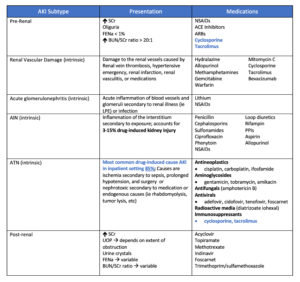
Courtesy: Lara Zakaria, PharmD CNS CDN IFMCP
Should the dose be adjusted to kidney function?
Many of the prescribed medications are excreted by the kidneys. Therefore, the doses of these medications should be adjusted according to the level of kidney function to avoid toxicity or side effects. Some medicines should be entirely discontinued at the advanced stage of kidney disease. This website can be accessed to see the dose adjustment needed for a specific drug according to the kidney function.

Does it interact with other medications?
Drugs can interact with each other in various ways. For example, a medication can affect the absorption of others by the gut. It may affect the way another drug is transported in the circulation. It may decrease or increase its breakdown by the liver or other organs. It can also affect its excretion by the kidneys or the gut. This interaction checker is a valuable tool for providers and patients to see if a drug that is being prescribed interacts with another one that the patient is already taking.
Does it affect micronutrients?
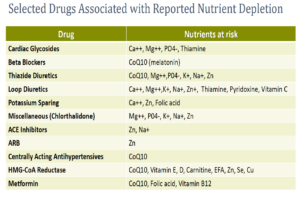
Micronutrients are essential for every structure and function in the human body, including but not limited to the function of the heart, blood vessels, and immune system. Thousands of enzymes in the body require micronutrients for optimal function. Some medications interact with micronutrients, and micronutrients may interfere with the action of drugs. The is a field of study called Drug-Induced Nutrient Depletion (DIND), and many books are written about it. The following table summarizes some of kidney patients’ most commonly used medications with their nutrient interactions.
The bottom line
Before taking a new medication, kidney patient should ask themselves and their provider the following questions: Is it necessary? Does it harm the kidneys? Does it interact with my other medications? Should the dose be adjusted for my kidney function? Does it interact with micronutrients? Please do not change or stop your medications without checking with your provider or nephrologist.
Download Your Copy!







The post Five questions kidney patients should ask before taking a new medication appeared first on Integrative Kidney.]]>

Toxins are lurking everywhere
More than 84,000 new synthetic chemicals have been registered with the US Environmental Protection Agency (EPA) over the past 40 years. The agency tracks 775 chemicals on their “toxic release list.” These chemicals are known to cause acute or chronic human health conditions. Many of these chemicals find their way into our tap water and our produce. They are used in food processing and textile and household maintenance products. They are even present in medical and dental tools and implants.
Ten steps to decrease exposure to harmful chemicals that can cause kidney disease
So, short of living on an isolated island away from any civilization, we are all exposed to these toxins to some degree. Since these chemical exposures are inevitable, it is important to take every step possible to decrease them. These steps include:
1. Avoid using pesticides and herbicides in your home and garden: many of these contain harmful chemicals that can lead to kidney damage and decreased renal function. In this study of the National Health and Nutrition Examination Survey (NHANES) database, a commonly used pesticide was linked to chronic kidney disease. Glyphosate, which is used in a common commercially available herbicide, has been linked to CKD in Sri Lanka. To date, there are no data about it in the US.
Join us in the fight against kidney disease and receive the FREE Report “5 Pitfalls to Avoid When Caring for Kidney Patients”
2. Filter water with reverse osmosis (R/O) and carbon filter: Sadly, most of these chemicals have made it to our tap water. The Environmental Working Group studies water quality in various regions of the US. By plugging in your zip code here, they give you a report of the chemicals present in your city. Installing a R/O and carbon filter in your house will remove the majority of these chemicals. If installing a whole R/O unit is too expensive, try using a high-quality water filtration pitcher such as Clearlyfiltered.
Download Your Copy!
3. Use non-toxic cleaning products: Many cleaning products contain volatile chemical compounds that are especially irritating to the eyes, throat, and lungs. But many chemicals that are present in these cleaning products are also linked to kidney disease.
4. Use nontoxic building materials and carpets whenever possible: Many building materials and carpets contain toxic chemicals such as arsenic and perfluorinated compounds that have been linked to kidney disease. For a list of chemical-free building materials, check out this link.
5. Use “natural” cosmetics, nail polish, and fragrances: Investigators in Beijing looked into the manifestation of chronic mercury poisoning in 172 patients. Of these patients, 26.74% had kidney injury and three out of four were women. The most common source of exposure leading to kidney disease was cosmetics. Use the Environmental Working group (EWG) database to guide you with your cosmetics choices.
6. Consider “organic whenever possible” in food but prioritize organic meat and dairy. Many food products are contaminated by pesticides, herbicides, and other chemicals that are present in the soil. However, we understand that eating all-organic can be expensive. You can depend on the EWG, which publishes an annual list of the “Dirty DozenTM,” the shopper’s guide to pesticides in produce. You can purchase their list of the “Clean 15TM.”
Download Your Copy!
7. Be careful with consumption of large predator fish: Ciguatera is a toxin that naturally occurs in algae. Fish that eat the algae become toxic. The effect is amplified up the food chain so that the largest predatory fish are potentially the most toxic. While Ciguatera is not directly toxic to the kidneys, it can lead to severe GI symptoms that can cause dehydration and acute kidney injury. More concerning, though, is mercury in the fish. Chronic mercury poisoning can lead to nephrotic syndrome, a kidney disorder that causes the body to excrete too much protein in the urine. Limit your consumption of fish to no more than two servings a week.
8. Do not get amalgam fillings and/or consider removal: Here again, there is the potential exposure to mercury leading to kidney injury. Amalgam fillings release low levels of mercury in the form of a vapor that can be inhaled and absorbed by the lungs. According to the FDA, the highest risk population are children, pregnant and nursing mothers, patients with neurological and kidney dysfunction, and those who are sensitive to mercury. Remove mercury fillings only under the care of a dentist specifically trained in this technique and who is aware of the risks.
9. Avoid living near highways: Living near heavy traffic is associated with higher exposure to air pollution. PM 2.5 refers to particulate matter that is up to 2.5 microns in size. Because of their small size, they are considered to be the worst of all air pollutants. They reach the alveoli of the lungs and enter the bloodstream. This studylooked at the link between PM 2.5 and chronic kidney disease (CKD) in the twin cities area of Minnesota. Researchers found that the risk of CKD increases with higher levels of PM 2.5. This remained true after adjusting for all other variables.
10. Clean furnace filters regularly; consider an air purifier: Air pollution is not limited to outdoor exposure; 4.1% of global deaths are attributed to indoor air pollution. According to the EPA, fuel-burning combustion appliances, central heating, and cooling systems, and humidification devices are some of the major causes of indoor air pollution.
The bottom line on environmental chemicals and kidney disease
Environmental toxin exposure is associated with poor kidney health. There are steps that you can take to limit your exposure as much as possible. Some of these steps may not be available to you at this time or may not be easy to implement all at once. The goal is to lower the overall burden of chemicals that can cause kidney disease. It takes time. Start with one of the steps here and refer back to this guide as you gradually incorporate each of these ten steps to reach a cleaner living and healthier kidneys.
In this new category, we will post once a month practical tips and tricks for healthy living with kidney disease. Consider these as tools that you can modify according to your unique situation. These tools span across our principles of Integrative medicine approach for kidney disease, including genetics, environmental exposure, gut health, lifestyle and others. We invite others to contribute to this category. If you are interested in contributing, please contact us info@inkidney.com.
The post What Chemicals Can Cause Kidney Disease and Ten Steps To Avoid Them appeared first on Integrative Kidney.]]>
Join us in the fight against kidney disease and receive the FREE Report “5 Pitfalls to Avoid When Caring for Kidney Patients”
Breakfast Chia Apple Oatmeal
By Majd Isreb, MD, FACP, FASN, IFMCP
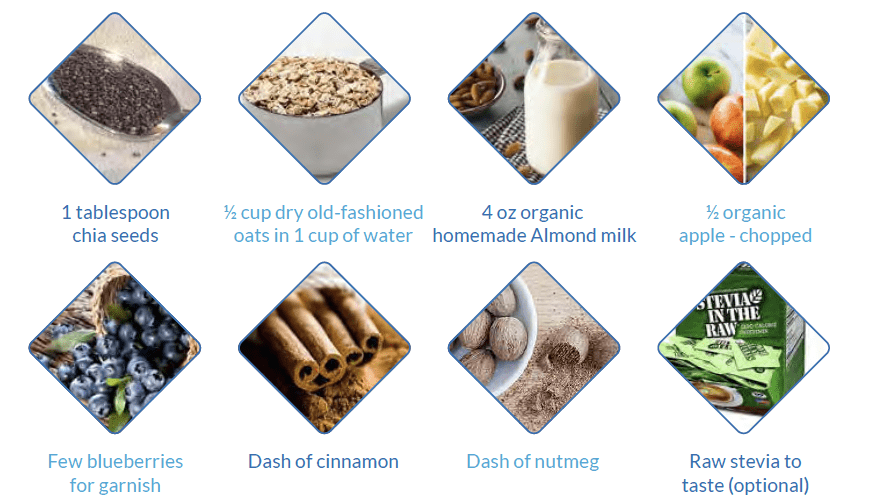
This is one of my favorite breakfast recipes. It is a healthy plant-based breakfast with 7 g protein and 10 g of fiber to start you day right.

Ingredients
Direction
- Boil 1 cup of water then add oats, chia seeds and chopped apple.
- Cook for 5 minutes, stirring over medium heat.
- Sprinkle cinnamon and nutmeg.
- Add raw stevia to taste
- Add 4 oz of almond milk if desired.
- Garnish with chopped apples and blueberries (optional)
Enjoy
Download Your Copy!
The post Breakfast Chia Apple Oatmeal appeared first on Integrative Kidney.]]>

Root Causes of Itching in Kidney Disease
Uremic toxin-induced neurologic changes
Several studies showed that patients with CKD have an imbalance of opioid receptors in the central and peripheral nervous system. Interestingly, itching in CKD correlates better with the level of uremic toxins than with glomerular filtration rate (GFR, a measurement of how well the kidneys are working). These toxins play an important role in these neurologic changes that are common in CKD. Most of these toxins are generated by the gut microbiome and are excreted by the renal tubules and not by glomerular filtration (or GFR). Measuring these toxins can be helpful. This can be done by a metabolomic test such as Genova’s Metabolomix+.
Download Your Copy!
Inflammation
CKD is an inflammatory disorder. Elevated inflammatory markers have been found to be associated with itching in kidney disease. Measuring inflammatory markers such as hsCRP, Th-1 cells, and IL-6 can be helpful in the assessment of the root cause of itching in CKD.
Dehydration
Dehydration can also lead to dry skin and worsens itching in CKD patients. Correcting the dehydration can be important in the management of itching.
Join us in the fight against kidney disease and receive the FREE Report “5 Pitfalls to Avoid When Caring for Kidney Patients”
Drug-induced itching
Many medications that are used in CKD have been associated with itching. These include calcium channel blockers, hydrochlorothiazide, and ACE inhibitors. In addition, other medications such as opioids, anticoagulants, and antibiotics can cause itching.
The itch-scratch-itch cycle
One of the major problems with itching is that it leads to scratching, and this can cause skin damage. The latter can cause further itching and the cycle continues.
Natural Treatments for itching in kidney disease
There are many steps you can take to get rid of itching in kidney disease and a kidney disease rash. The first step is to visit a healthcare provider to help you determine the root cause. You can download this two-page handout to guide you in the natural treatment of itching. There is hope that you’ll relieve this frustrating problem and have comfortable skin once again.
The post Root Causes of Itching in Kidney Disease appeared first on Integrative Kidney.]]>