The root cause of IgA nephropathy
IgA nephropathy is a kidney disease that is defined by the pathologic appearance of glomerular deposition of IgA immune complexes. However, this definition does not address the root cause of the disease.
It has been increasingly recognized that IgA immune complex that deposit in the kidneys predominantly contain polymeric IgA1 lacking galactose within its O-glycosylated hinge region.
In this study, researchers found that patients with IgA nephropathy have elevated levels of certain B cells that are enriched for λ light chains. These cells are predestined for homing to upper respiratory and digestive tract mucosal tissues. In the mucosal tissues, these B cells mature and excrete abnormal IgA in the setting of upper respiratory or digestive infection. You can read more IgA nephropathy by reading our blog here.
Join us in the fight against kidney disease and receive the FREE Report “5 Pitfalls to Avoid When Caring for Kidney Patients”
Metformin: Some people love it and some people hate it… But it sure is getting a lot of attention lately
This study was done in rats with “non-diabetic kidney disease.” CKD was established in these rats by feeding them high adenine diet. Then they were randomized to receive either metformin or canagliflozin (an SGLT-2 inhibitor).
Metformin, but not canagliflozin, halted the decline in kidney function. Additionally, kidneys of metformin-treated animals showed less interstitial area and inflammation as compared to the vehicle group.
Metformin is increasingly being studied in humans for various kidney diseases. If used judiciously it may be a cheap alternative to preserving kidney function.
Download Your Copy!






Tremor + gum disease + nephrotic Syndrome = ?
In this study, investigators in Beijing looked into the manifestation of mercury poisoning in 172 patients. 26.74% of these patients had kidney injury (3/4 were women) and most of them had nephrotic syndrome. The most common finding on the biopsy was membranous nephropathy.
Other findings of chronic mercury poisoning were neurotoxicity and gingivitis. Chelation with DMPS alone was as effective as chelation and prednisone in reversing kidney injury.
The most common source of exposure without kidney disease was industrial exposure. Interestingly, the most common source of exposure leading to kidney disease was cosmetics containing ionic mercury (mercury concentration in one of the patients cosmetic was 4600 mg/kg – national standards are < 1 mg/kg).
Join here to receive FREE monthly updates on the latest research in Integrative Nephrology straight to your inbox.
We would love to here your feedback. Let us know what you think of these educational materials and if you like us to focus on certain topics. Email us at info@inkidney.com
The post April Research And News appeared first on Integrative Kidney.]]>

Root Causes of Itching in Kidney Disease
Uremic toxin-induced neurologic changes
Several studies showed that patients with CKD have an imbalance of opioid receptors in the central and peripheral nervous system. Interestingly, itching in CKD correlates better with the level of uremic toxins than with glomerular filtration rate (GFR, a measurement of how well the kidneys are working). These toxins play an important role in these neurologic changes that are common in CKD. Most of these toxins are generated by the gut microbiome and are excreted by the renal tubules and not by glomerular filtration (or GFR). Measuring these toxins can be helpful. This can be done by a metabolomic test such as Genova’s Metabolomix+.
Download Your Copy!
Inflammation
CKD is an inflammatory disorder. Elevated inflammatory markers have been found to be associated with itching in kidney disease. Measuring inflammatory markers such as hsCRP, Th-1 cells, and IL-6 can be helpful in the assessment of the root cause of itching in CKD.
Dehydration
Dehydration can also lead to dry skin and worsens itching in CKD patients. Correcting the dehydration can be important in the management of itching.
Join us in the fight against kidney disease and receive the FREE Report “5 Pitfalls to Avoid When Caring for Kidney Patients”
Drug-induced itching
Many medications that are used in CKD have been associated with itching. These include calcium channel blockers, hydrochlorothiazide, and ACE inhibitors. In addition, other medications such as opioids, anticoagulants, and antibiotics can cause itching.
The itch-scratch-itch cycle
One of the major problems with itching is that it leads to scratching, and this can cause skin damage. The latter can cause further itching and the cycle continues.
Natural Treatments for itching in kidney disease
There are many steps you can take to get rid of itching in kidney disease and a kidney disease rash. The first step is to visit a healthcare provider to help you determine the root cause. You can download this two-page handout to guide you in the natural treatment of itching. There is hope that you’ll relieve this frustrating problem and have comfortable skin once again.
The post Root Causes of Itching in Kidney Disease appeared first on Integrative Kidney.]]>

3 years of lifestyle interventions improved exercise capacity and decreased the losses in neuromuscular and cardiorespiratory fitness in CKD patients
In this study, researchers randomized 161 patients with stage 3-4 CKD to either get usual care or usual care plus lifestyle “intervention” for 3 years.
The lifestyle intervention comprised of care from a multidisciplinary team, including a nephrologist, nurse practitioner, exercise physiologist, dietitian, diabetes educator, psychologist, and social worker.
The patients were coached for 8 weeks and then followed for 34 months with a home-based program.
The study did not look at the progression of CKD but it found that a 3-year lifestyle intervention doubled the percentage of CKD patients meeting physical activity guidelines, improved exercise capacity, and decreased the losses in neuromuscular and cardiorespiratory fitness.
It appears that the study mainly focused on exercise. So imagine the benefit of a comprehensive lifestyle modification plan that includes nutrition, exercise, stress management, sleep improvement, and attention to toxin exposure and gut-kidney connection. That’s what we focus on.
Join us in the fight against kidney disease and receive the FREE Report “5 Pitfalls to Avoid When Caring for Kidney Patients”
Curcumin powder did not improve markers of vascular dysfunction in PKD
This is essentially a negative study.
It demonstrated that Curcumin powder did not improve markers of vascular dysfunction in children and young adults with PKD. The study was conducted for only one year using a dose of 25 mg/kg per day of curcumin.
This is a classic supplement or nutrient study that is usually underpowered or conducted for short periods of time for a disease that takes years or even decades to evolve. Nevertheless, the study proved that short-term use of curcumin is not beneficial for vascular health for young patients with polycystic kidney disease.
Low serum zinc levels were associated with infections in CKD patients
This did not really need research but it is now studied and it is official: Low zinc levels in patients with CKD lead to infection (..well among other things).
This retrospective study analyzed data from 299 CKD patients who had serum zinc levels checked to evaluate anemia. They used the level of 50 mcg/dl as the cutoff between low or “high” zinc values.
Low serum zinc values remained an independent risk factor for infection-related hospitalization. This was especially true for patients taking proton pump inhibitors (PPIs) medications.
Read about the effect of Zinc on kidney health in this blog.
Download Your Copy!
Join here to receive FREE monthly update on the latest research in Integrative Nephrology straight to your inbox.
We would love to here your feedback. Let us know what you think of these educational materials and if you like us to focus on certain topics. Email us at info@inkidney.com
The post January Research and News appeared first on Integrative Kidney.]]>Low magnesium levels have been associated with a number of adverse events, such as high risk for heart disease. However, little is understood about magnesium and kidney health. Here, we will discuss the potential benefits of magnesium on the kidneys. This is one of two articles on magnesium and kidneys. For more on how to test and treat kidney patients with magnesium deficiency, see part two, “Magnesium Deficiency: Assessment and Management for Better Kidney Health.”
Dietary sources of magnesium
A daily intake of 3.6 mg/kg is necessary to maintain magnesium balance in humans under normal conditions. This is estimated to be between 320 to 420 mg/day (13–17 mmol/day) for adults. Sadly, there has been a steady decline in magnesium content in cultivated fruits and vegetables over the past 100 years. This is due to depletion of magnesium in soil over time. This, along with the rise of ultra-processed food, sodas, and taking medications such as proton pump inhibitors and diuretics that deplete magnesium levels (polypharmacy), has led to rising prevalence of magnesium deficiency.
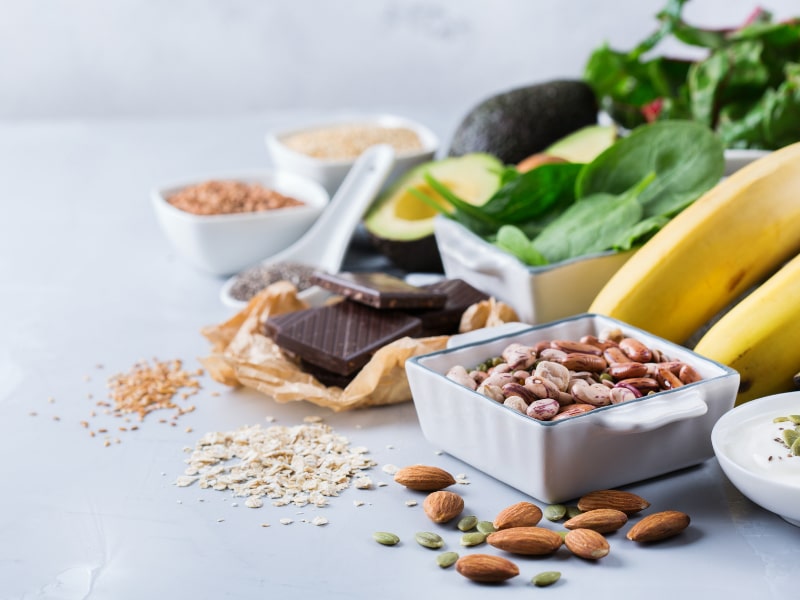
Traditionally, the highest food sources of magnesium are:
- Leafy greens (78 mg/serving on average)
- Nuts (80 mg/serving on average)
- Pumpkin seeds have the highest level of magnesium per serving (156 mg).
- Whole grains (46 mg/serving on average)
A complete list of foods high in magnesium can be found here.
Can Magnesium Help Kidney Function?
There are many potential benefits of magnesium for kidney health including improving blood pressure control, insulin sensitivity, bone health, vascular health, and preventing kidney stones. Let’s explore the data.
Magnesium and blood pressure control
Magnesium supplementation may help reduce blood pressure (BP) by increasing the production of nitric oxide. Nitric oxide acts as a signaling molecule that helps relax blood vessels, which lowers BP. In fact, a review of 34 studies showed that supplementing magnesium with an average dose of 368 mg per day for 3 months can decrease systolic BP by 2.00 mmHg and diastolic BP by 1.78 mmHg. This supplementation was accompanied by 0.05 mmol/L increase in serum magnesium levels.
Download Your Copy!
Magnesium and insulin sensitivity
Diabetes is one of the major risk factors for kidney disease worldwide. Higher dietary intake of magnesium has been correlated with lower diabetes incidence. A review of 18 studies in people with diabetes showed that magnesium supplements reduced fasting plasma glucose levels. In people who are at high risk for diabetes, magnesium supplementation significantly improved plasma glucose levels after a 2-hour oral glucose tolerance test. These effects are thought to be due to the effects of magnesium on insulin receptors and signaling that allows for improvement in glucose transport and utilization.
Magnesium and vascular health
Magnesium levels have been associated with a lower incidence of cardiovascular disease. In fact, supplementing with magnesium was associated with improvement in vascular flow and endothelial function. Endothelial function refers to the lining of the blood vessels, which is involved in regulating blood vessel health and blood clotting.
Studies in patients receiving dialysis have shown that having a lower serum magnesium level is a significant risk for cardiovascular mortality. Laboratory data show that magnesium inhibits high phosphate-induced calcification of vascular smooth muscle cells. Calcification of arteries is a strong predictor of heart disease and heart-disease-related death.
Magnesium and vitamin D
Magnesium is essential to vitamin D metabolism. Vitamin D that we eat or make in our skin from sun exposure circulates in the blood and is bound to vitamin D binding protein (VDBP). VDBP binding activity depends on adequate magnesium levels. In addition, magnesium is an essential cofactor for the enzymes that activate vitamin D. Studies have demonstrated that magnesium deficiency is associated with impaired vitamin D metabolism.
On the other hand, taking large doses of vitamin D can induce severe depletion of magnesium. This is thought to be due to the overutilization of magnesium. Therefore, adequate magnesium supplementation should be an important part of vitamin D therapy.
Adequate magnesium supplementation should be an important part of vitamin D therapy.
Share on X
Magnesium and bone health
Besides magnesium’s effects on vitamin D metabolism, it is an essential component of hydroxyapatite, an essential component of bone and teeth. In fact, 60% of total Mg is stored in the bone. Low magnesium intake was found to be associated with lower bone mineral density in postmenopausal women. Magnesium deficiency contributes to osteoporosis directly by acting on crystal formation and on bone cells and indirectly by impacting the secretion and the activity of parathyroid hormone (PTH) and by promoting oxidative stress and inflammation.
In addition, a review of 8 studies looked at magnesium and chronic kidney disease (CKD). The study investigated magnesium supplementation on parameters of CKD-related mineral bone disease (CKD-MBD). Mg supplementation improved PTH levels and carotid intima-media thickness (CIMT). Low serum Mg levels were also found to impact PTH and worsen osteoporosis in CKD patients, particularly with diabetes.
Magnesium and kidney stones
Mg acts as an inhibitor of calcium oxalate crystallization and stone formation in the urine. It also decreases the absorption of dietary oxalate in the gut. Mg supplementation in patients with kidney stones was found to decrease the incidence of stone formation even in patients without signs of Mg deficiency.
Magnesium as a phosphate binder
Hyperphosphatemia (high phosphate level) is common in advanced kidney disease. Many kidney patients with stage 4 and above use binders that bind phosphate (or “phosphorus,” as it is commonly known) in the food and prevent it from getting absorbed. High phosphate levels have been associated with poor bone and vascular health in kidney patients. In fact, higher dietary phosphate load can be seen in earlier stages of CKD, and it can do harm even before it is detected.
Magnesium carbonate has been successfully used as a phosphate binder. Magnesium based phosphate binders were also found to reduce vascular calcifications in rats with kidney disease. Iron-magnesium hydroxycarbonate was also studied and found to be well tolerated and can effectively lower phosphate levels in dialysis patients. It is essential to know that most of the magnesium used as a phosphorus binder will not be absorbed.
The bottom line on magnesium and kidneys
Magnesium is essential to many biological functions. It has many health benefits for kidney, bone, and vascular health. Optimizing magnesium status is, therefore, an important step in the integrative approach to kidney health. In part two of this blog, “Magnesium Deficiency: Assessment and Management for Better Kidney Health,” we will discuss practical steps for figuring out a person’s actual magnesium status, the best form of magnesium to take, and the dose I recommend for each condition.
The post Magnesium and kidneys appeared first on Integrative Kidney.]]>
Lifestyle modifications do indeed prevent CKD and delay its progression
This study is coming from Japan. Researchers found that two years of healthy lifestyle choices prevent against the development of kidney disease and protein in the urine. Lifestyle modifications also slowed the decline in kidney function.
They studied 451,534 people (277,494 men and 174,040 women) aged 20–79 years. Healthy lifestyle choices in this study were defined as: 1. No smoking 2. Healthy eating habits, and 3. Low BMI
Now, we all know that there is more to lifestyle modifications than this but this is definitely a start.
Is Urea by itself toxic?
The authors in this study published in NDT definitely think so. They noted that the accumulation of uremic toxins is a risk factor for mortality and accelerated atherogenesis in patients with CKD. The researchers found that a post-translational protein modification called carbamylation is a predictor of CKD progression. They also noted that urea by itself promotes the carbamylation of proteins.
So urea is not just a benign marker and should be classified as a uremic toxin. The level of protein carbamylation may be used as a marker for risk stratification of CKD outcomes.
Download Your Copy!
Magnesium, bones, and kidneys… What?!
This study is coming from the dialysis world. It’s a meta-analysis that examined the effects of magnesium supplementation on chronic kidney disease mineral bone disease (CKD-MBD). As the researchers mentioned, magnesium supplementation in dialysis patients is controversial. However, this study showed that it helps by regulating calcium and parathyroid hormone and it decreases carotid intima-media thickness.
This is in the dialysis population. So paying attention to magnesium balance and supplementation may have a much better role in bone and vascular health in earlier stages of CKD. Optimizing vitamin D, vitamin K2, vitamin A, calcium, phosphorus , and magnesium is very important to improve bone and vascular health in CKD patients.
Subscribe here to receive a monthly update on the latest research in Integrative Nephrology.
The post October Research and News appeared first on Integrative Kidney.]]>
Knowledge Does Not Correspond to Adherence to Renal Diet Restrictions in Patients With Chronic Kidney Disease
Education or knowledge alone is not sufficient to make meaningful lifestyle changes. It is not enough for a patient to meet with a doctor, dietitian, or nutritionist once and be expected to be educated about diet and other modifications.
The researchers in this study proved and concluded that “instruction efforts should go beyond providing nutrient-based diet information, and instead emphasize healthy food patterns and incorporate counseling to promote behavior change.”
In another word, patients need to be educated and coached to achieve better lifestyles and outcomes.
Join us in the fight against kidney disease and receive the FREE Report “5 Pitfalls to Avoid When Caring for Kidney Patients”
Apixaban, compared with warfarin, was associated with a lower risk of CKD stage progression
In this study, researchers studied 12,816 patients who received either apixaban or warfarin for non-valvular atrial fibrillation. Apixaban was associated with slower progression of CKD than warfarin. We think that this underlines the role of vitamin K in vascular and kidney health.
Periodontal disease was associated with incident kidney disease
Researchers studied data from the Hispanic community health study to see if there is any association between periodontal disease and the development of kidney disease.
They found that the presence of ≥30% of sites with probing depth ≥4 mm and absence of functional dentition (<21 permanent teeth present) were each associated with increased risk for incident low eGFR.
Does treating periodontal disease prevent the development and progression of CKD? Research does not have the answer yet but we think so.
Download Your Copy!
Join here to receive FREE monthly updates on the latest research in Integrative Nephrology, and tips on managing kidney disease straight to your inbox.
We would love to hear your feedback. Let us know what you think of these educational materials and if you like us to focus on certain topics. Email us at info@inkidney.com

There are practical steps that you can take to improve your sleep. These include creating a relaxing sleep environment, lowering the temperature in the bedroom, making sure it is dark, and having a comfortable mattress, etc. Yet, many people don’t realize that a good sleep is more about what we do away from the bed than what we do in bed.
Join us in the fight against kidney disease and receive the FREE Report “5 Pitfalls to Avoid When Caring for Kidney Patients”
In the era of social media, technology, and 24-hour news that are always available in the palm of our hands, our minds are going a million miles per hour. Many of us are juggling so many things and have even more worries. We worry about work, about the kids, emails, social media reactions, finances and many other things. Some of us get to bed with exhausted bodies but minds that are still going at full speed.
So, what do you need to do to help the brain shut down? Here are the five steps to help you unwind your brain and get a better sleep.
Step 1: Don’t carry today’s problems into bed
Your mind is not going to stop thinking about today’s problems and worries unless you help it clean up. You must tie up all the loose ends from the day. The best way to do that is by allowing your mind to settle down two hours before bedtime. Simply, write down ALL your thoughts and worries on a paper or in a notebook. It does not matter how or what. Think of it as a thought download or a brain dump.
Do this process outside the bedroom and leave the notebook or paper there. This will train your brain to leave the worrying thoughts outside the bedroom. It allows space for positive thoughts. Positive thoughts are calming and will help you to go to sleep.
Block "fundamentals" not found
Step 2: Plan your tomorrow
After you downloaded your thoughts, look at your plan for the next day. Look at your calendar and prepare for that early meeting, pick workout clothes, prepare and pack for lunch. Your attention to details will help your mind avoid the worry about tomorrow. This will set you up for success and give you control. The control that will help you settle your mind.
Step 3: Keep your phone outside of the bedroom
In fact, keep all electronics out of the bedroom. The bedroom is for two things, sleep and intimacy. I actually recommend that you stop looking at your phone, social media, emails or any other projects for two hours before going to bed. Trust me, I know it is hard and I am guilty of this too.
I also get that some of you may be in a profession like me where you take calls at night and may need a phone nearby. But in the era of smartphones, it is easy for the mind to wander at night. These types of phones bring your worries and the whole world with you to the bedroom. Do you want the world to be in your bedroom when you’re trying to sleep?
So, if your profession requires it, get a landline or cheap flip phone to be by your bed for emergencies. No texting, no social media, and no news in the bedroom. Research found that one third of people wake up at night and check their smartphones.
Step 4: Create a bedtime restorative ritual
A restorative ritual signals your brain that you’re going into a relaxed state. These rituals include things like taking a bath or a hot shower, drinking hot green tea, lighting up candles, dimming the lights, praying or meditating. You can also read a fiction book to take your mind out of your own story into the story of the book.
Step 5: Think happy thoughts
Pick a location of your dreams. If you love to be on the beach in Hawaii or on top of mount Everest immerse yourself in the experience. Feel it, smell it, see it and dream it. Visualize it as if you are living in it. This powerful way will calm your mind and set it up for dreaming. The goal is to feel calm, safe, quiet and “tucked in.”
Bonus: what if you wake up in the middle of the night
Waking up in the middle of the night is not unusual. Researchers found that 31% of people wake up in the middle of the night at least 3 times a week. So, if you wake and you can’t go back to sleep, use the 15 minute rule. If you wake up in the middle of the night and after 15 minutes you don’t drift back into sleep, you should get out of bed. Do not lay there and start thinking about going to sleep. Do not look at the time, do not check your phone, and do not make a cup of coffee.
Get up and go to another room. Sit in a comfortable chair, read that novel, light up a candle. If your mind is racing again. Go back to that piece of paper or notebook and write down your thoughts and worries again. Do not do these things in bed because that will train your mind to associate your bed with wakefulness instead of sleep. When you feel drowsy again, go back to your bed and go to sleep.
The Bottom Line
Here is the trick though, you have to do these steps every night. You may feel like you want to stay up watching a movie on your favorite app or stay on your phone or catch up on a project instead of your bedtime ritual. But your health and your mind deserve a good sleep. So, this simple promise to yourself will help you establish the good habit of sleep and set you up for better health and success.
The post Five Simple Steps to Improve Sleep For Kidney Health appeared first on Integrative Kidney.]]>
The Role of Dietary Fiber Supplementation in Regulating Uremic Toxins in Patients With Chronic Kidney Disease: A Meta-Analysis of Randomized Controlled Trials
Gut-derived uremic toxins, including indoxyl sulfate (IS) and p-cresyl sulfate (PCS), are waste products that accumulate in the body due to decreased clearance by the failing kidneys. These accumulated uremic toxins are a risk factor associated with cardiovascular disease, progression of kidney dysfunction, mineral bone disorders, and increased mortality in patients with CKD. This meta-analysis showed that dietary fiber supplementation could decrease IS and PCS levels in patients with CKD.
https://www.jrnjournal.org/article/S1051-2276(20)30291-0/fulltext
Causal effects of physical activity or sedentary behaviors on kidney function: an integrated population-scale observational analysis and Mendelian randomization study
The health benefits of exercise and regular physical activity are vast. Using Mendelian randomization (MR) to assess causality, this study found that “the genetic predisposition to a higher degree of physical activity was associated with a lower risk of CKD and a higher eGFR, while the genetically predicted television watching duration was associated with a higher risk of CKD and a lower eGFR.”
https://academic.oup.com/ndt/advance-article/doi/10.1093/ndt/gfab153/6214515?login=true
Prevalence of Inflammatory Bowel Disease and Celiac Disease in Patients with IgA Nephropathy over Time
Poor gut health and a lack of intestinal wall integrity is linked to many diseases, including IgA nephropathy (IgAN). The results of this Finnish study showed an increase in the prevalence of inflammatory bowel disease (IBD) in patients with newly diagnosed IgAN over a 36-year period.
https://www.karger.com/Article/Abstract/511555
The post June Research and News appeared first on Integrative Kidney.]]>Although there has been a considerable reduction in lead exposure over the last few decades, low level exposure is still common, globally. Concerns about chronic low-level lead toxicity are associated with gradual accumulation of the heavy metal in the body. In this blog, we will focus on the effect of lead exposure on kidney health.

Sources of lead exposure
Lead contamination can be due to exposure to various household products, water, soil, and air. Most significant sources of lead include:
- Homes built before 1978 (when lead-based paints were banned) probably contain lead-based paint.
- Water pipes may contain lead (recently we learned about the impact on which can lead to contamination of community water crisis as it has happened in Flint, MI).
- Some toys
- Jewelry
- Cosmetics
- People involved in jobs and hobbies working with stain glass, ceramic glazing, welding and batteries
- Aviation fuel (living near airports may increase risk of exposure in air and soil)
It is estimated that a large population of adults and children in the United States have blood lead levels that are higher than what is considered safe.
How does the body handle lead?
When it enters the GI tract, lead utilizes the iron gates (Divalent metal transporter (DMT1)) in the gut to enter systemic circulation. In the case of mineral deficiency, especially iron deficiency, lead can more easily compete for absorption via DMT1. This is significant, considering the low mineral status of the Standard American Diet (SAD). Furthermore, lead can compete with iron for incorporation into heme by inhibition of an enzyme called 6-aminolevulinic acid dehydratase (ALAD), increasing risk of iron-deficiency anemia.
Lead cannot be converted by the body, and is either stored in tissue (primarily in bone, replacing calcium) or eliminated (primarily through the kidneys and gut). It can accumulate and remain stored in the bones for decades, and is released into the blood under certain circumstances such as pregnancy, breast-feeding, menopause, weight loss and advancing age.
Download Your Copy!
How the kidneys handle lead
Lead competes with iron and calcium due to similarities in atomic size. After lead is filtered by the glomeruli, it enters the proximal tubular cells via calcium channels. In fact, lead is 10 times more efficient at utilizing calcium channels than calcium itself. Some of it returns to recirculate in the blood while some is transported back to the tubular lumen through other transporters. This constant exposure causes damage to the tubules and increases oxidative stress by using up glutathione, an antioxidant.
The effect of lead on the kidneys
The kidneys are the major site of elimination for lead and appear to be one of the primary sites of accumulation. Even exposure to small levels of lead early in life can lead to glomerular hypertrophy and may disrupt glomerular development leading to renal insufficiency later in life.
However, the majority of lead toxicity in the kidneys is due to its effects on the tubules. Chronic exposure has been shown to lead to progressive tubulointerstitial nephritis including inflammation, fibrosis, and atrophy. The mechanism involves oxidative stress, mitochondrial injury, and acting as a functional substitute to calcium and increasing unchecked activity of protein kinase C. Lead can also replace calcium in the cellular tight junctions compromising its integrity. Finally, lead decreases the ability of the tubules to eliminate uric acid.
Collectively, these lead to the classic triad of lead exposure which includes progressive kidney disease, elevated blood pressure, and gout.
Nutrients and lead exposure
It makes sense now to understand that a deficiency in iron and calcium can lead to an increase in lead toxicity. It has been documented that the absorption of lead in the gut is actually inversely proportional to dietary levels of calcium. Studies in children demonstrated a relationship between dietary calcium and blood levels of lead by linking a low dietary intake of calcium to higher lead levels. Indeed, increasing dietary calcium intake has been shown to decrease blood levels of lead.
Genetics and lead exposure
Genetic mutations in iron and calcium metabolism can greatly impact lead toxicity. In fact, genetic mutations in the gene coding for ALAD have been shown to affect blood and bone lead levels. In addition, polymorphisms in the gene for vitamin D receptor (VDR) was found to influence the accumulation of lead in bone. VDR is involved in calcium absorption from the gut and its placement in bone. Finally, variations in the hemochromatosis gene that codes for the HFE protein associated with iron absorption can also increase risk of lead absorption. These genetic variations can increase an individual’s susceptibility to lead toxicity even from relatively low-level exposure. In other words, what may be a “safe”exposure level to one person may be a toxic level to another depending on genetic variables especially when combined with other lifestyle or occupational factors.
The microbiome and lead exposure
Metabolomics is the study of the substrates and byproducts of metabolism of various microbes found in the body and their impact on the system. Studies in this emerging field have demonstrated that exposure to lead causes alterations in gut microbiome diversity and metabolic functions. These changes are responsible for the development of obesity when exposure to lead occurs in early childhood. Some of these changes are mediated through epigenetics.
On the other hand, there is some evidence that preexisting depletions in the diversity and quantity of the gut microbiome increases the risk for lead toxicity. This may be independent or further complicated by the impact of dysbiosis on digestion, especially on calcium and iron absorption.
Neutralizing lead exposure
There are medications that are used to chelate lead including calcium disodium edetate (EDTA) which can be used for assessing body stores of lead and for treatment. Interestingly, calcium channel blockers such as verapamil have been found to protect the kidneys against the effects of lead toxicity.
Curcumin has been found to protect kidney cells from the oxidative stress of lead toxicity.
In addition, baicalin, a traditional Chinese herb, has been found to protect the kidneys in a similar manner.
Therapeutic treatment of iron or calcium deficiency can also be effective in reducing lead absorption. Therefore, monitoring mineral levels and supplementation might be a useful approach in management of these cases.
Protecting the body from lead
There are ways to protect the body from the negative effects of heavy metals, including lead. Incorporating therapeutic foods on a regular basis such as cilantro, blueberries, garlic, ginger, onion, green tea, and tomato supplies the body with vitamins, minerals, and nutrients that decrease the risk of lead toxicity. Certain essential metals and vitamins (zinc, calcium, iron, selenium, magnesium, vitamin C, B1 and B6) may be supplemented to provide protection and boost antioxidant levels. Other practices that help the body with detox are exercise, sweating, dry brushing, drinking enough water, and lymphatic massage. Correcting nutrient deficiencies through food and supplements, as well as incorporating routine detox practices, is key to prevent lead absorption and safely remove it from the body, especially in those at high-risk of exposure.
The Bottom Line
Lead exposure remains a global public health issue. Even low levels of lead exposure have been associated with decreased kidney function. In addition to addressing possible sources of exposure, an integrative medicine approach to lead toxicity should use appropriate nutritional evaluations and interventions, as well as biotransformation and antioxidant support to help decrease the impact of toxicity and the risk of chronic kidney disease.
The post Lead Exposure and Kidney Health appeared first on Integrative Kidney.]]>Kidney stone formation (urolithiasis) is a complex disease influenced by multiple factors including diet, genetics, and environment. They are painful, inconvenient, and when left untreated, they may contribute to more serious conditions including obstruction and kidney damage.
By Lara Zakaria, PharmD, CNS, CDN, IFMCP
Read more about the etiology and prevalence of kidney stones here.
In this series we’re building a case for a more integrative approach to preventing kidney stone formation.
Conventionally, the treatment approach does address kidney stones via a multi-pronged approach that may include medication, dietary and lifestyle, surgical removal, and using ultrasonic waves to break up stone.
However, these guidelines tend to focus too far downstream, on stone composition instead of on the underlying pathology upstream. Instead, we advocate for a more comprehensive approach that focuses on risk factors to prevent formation. Those factors include:
· Type of stone
· Socioeconomic factors
· Diet
· Hydration and electrolyte balance
· Microbiome and gut health
· Genetics
We covered individual dietary components in detail in a previous blog. Today we’ll look at the gut-kidney stone connection and the impact of the microbiome.
Gut Integrity and Kidney Stones: Leaky Gut
A normal and healthy GI tract has a natural barrier. This barrier serves to protect the GI and has three major jobs: 1. ensure proper digestion and absorption of nutrients and 2. ensure elimination of toxins and 3. protect the integrity of the microbiome – the “good” bacteria that lives in our GI tract and works with our body to maintain health.
Leaky gut describes a state when the cells that make up the lining of the GI tract separate enough to allow the contents of the gut to leak out. This is also sometimes called intestinal permeability or IP for short. This is a problem because it reduces absorption of nutrients, causes toxins to build up, alters the balance of the gut microbiome, and results in systemic inflammation.
One of the major contributors to leaky gut is the standard American diet (SAD), which seems to increase risk of kidney stone formation. When we use the term SAD, we are generally referring to a diet that includes:
· Consumption of sugary beverages and soda (and high carbohydrate consumption in general)
· Increased intake of processed/refined foods like cereals, crackers, baked goods, etc…
· Processed, fried, conventionally raised, high-nitrate animal protein
· Low intake of fiber and fresh produce in general
· A “beige” diet (low in phytonutrients and antioxidants) from consuming a variety of colorful fruits and vegetables
· Inadequate amounts of healthy, anti-inflammatory fats, and high amounts of refined unhealthy fats
We have already established that eating more fresh produce, is protective from kidney stone formation, and we’ve done a deeper dive on specific nutrition impact on kidney stone risk in another blog if you’d like to learn more.
There are several factors that may contribute to development of leaky gut:
· “Proinflammatory” SAD: too much processed and high-sugar foods, not enough fiber and the wrong inflammatory fats
· Food sensitivities: consuming food that are cause reactivity
· Overconsumption of caffeine and alcohol – irritants to gut lining
· Use of certain medications, including NSIADs, steroids, antibiotics
· Stress and poor-quality sleep
We address risk factors for intestinal permeability in more detail in a previous blog here, as well as dive into a comprehensive gut restoration strategy here in this 5-part series.
The Microbiome and Kidney Stones
Balance of the gut bacteria also play an important role in causing or preventing kidney stones. The most studied organism is Oxalobacter formigenes, which has been found to be protective when present in adequate quantities as part of the GI microflora. This bacterium degrades oxalate in the gut decreasing its absorption and excretion in the urine.
When Oxalobacter was discovered, scientists thought they had pinpointed the key to curing kidney stones. They concluded that simply supplementing this missing species should reduce risk of stone formation in susceptible individuals. It would turn out that the connection wasn’t that simple.
More recent evidence points to a more complex picture in the connection between microbiome diversity and kidney stone pathology. The emerging research shows increased risk in kidney stone formation in certain susceptible individuals also presented with alterations in normal microbiome and metabolome (metabolic byproducts from microflora) – also termed dysbiosis.
In other words, it’s likely that genetic factors might be “turned on” by dysbiosis leading to increased risk of kidney stone formation in certain individuals. The good news is that means they should be “turned off” when the microbiome balance is restored.
Studies that looked at the use of targeted probiotics have failed to show enough significant improvement of risk of urolithiasis. Although there’s been some limited and temporary reduction in oxalate excretion and kidney stone formation with the use of a combination of Lactobacillus, Bifidobacterium, Enterococcus, it’s been shown to be temporary and limited in benefit. This is because dysbiosis cannot be addressed by simply applying a band aid of a probiotic.
We recommend instead a more comprehensive approach to gut restoration and microbiome balance. You can read more about the 5R protocol in our comprehensive 5-part series on gut restoration.
The Bottom Line
Although initial findings about the impact of the microflora that looked at Oxalobacter in isolation have not demonstrated significance in reducing incidence of kidney stone formation, more recent evidence pointing to an interplay of factors on microbiome diversity is promising. Furthermore, factors that impact kidney stone formation include dietary factors, including food quality, nutrient composition, and dehydration. Along with environmental factors, lifestyle, genetics, and gut integrity and microbiome balance should be addressed through a comprehensive and personalized approach. Practitioners working with individuals to prevent kidney stone formation should formulate a patient care plan that modifies all relevant components in their integrative approach to maximize effectiveness in preventing urolithiasis.
The post The Microbiome and Kidney Stone Formation appeared first on Integrative Kidney.]]>